
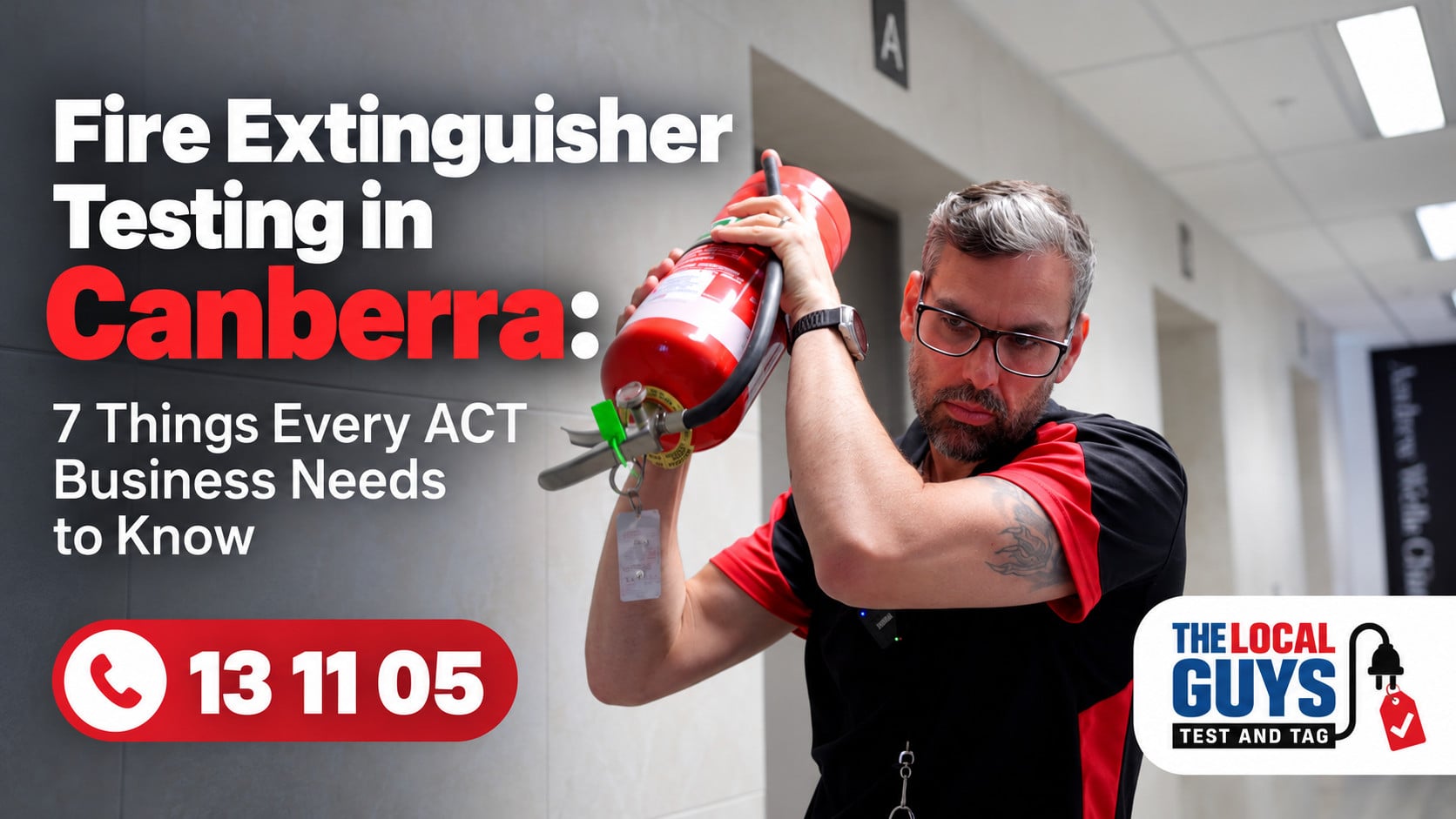
Most workplaces have at least one fire extinguisher mounted somewhere on the wall. You might walk past it every day without giving it much thought, especially if nobody has ever needed to use it. But having an extinguisher in the building doesn't necessarily mean it's ready to work when an emergency occurs.
Fire extinguishers need regular inspections and maintenance to help ensure they remain safe, accessible and suitable for use. For Canberra businesses, understanding the relevant fire safety requirements is part of maintaining a safer workplace and meeting applicable obligations.
The challenge is that fire extinguisher maintenance isn't always straightforward. There are different servicing intervals, several extinguisher types and specific checks that need to be completed. A quick look at the pressure gauge doesn't necessarily tell you whether the equipment has been properly maintained.
This guide explains seven important things ACT businesses should know about fire extinguisher testing, including AS 1851 requirements, inspection intervals, service records and what happens when an extinguisher fails an inspection.
If your workplace also needs electrical safety testing, explore our test and tag services in Canberra to learn about the services available.
1. Understand Fire Extinguisher Maintenance Requirements in Canberra
Businesses in the Australian Capital Territory have responsibilities for maintaining a safe workplace, including managing risks associated with fire.
The specific fire safety equipment required depends on factors such as the building's use, classification, applicable building requirements and the activities carried out on the premises.
Portable fire extinguishers are one part of a building's fire safety arrangements. They need to be suitable for the relevant fire risks, accessible when required and maintained according to applicable standards.
The ACT's regulatory framework includes building and work health and safety legislation, along with requirements that may reference Australian Standards.
For official legislative information, businesses can consult the ACT Legislation Register.
Who Is Responsible for Fire Extinguisher Maintenance?
Responsibility can depend on the building, lease arrangements and applicable legal obligations.
A building owner may have responsibilities for maintaining certain fire safety systems, while a business occupying the premises has its own duties to manage workplace risks.
For example, a retail business operating from leased premises should not automatically assume that every fire safety responsibility belongs to the landlord.
Similarly, building managers should not assume that individual tenants are responsible for all shared fire protection equipment.
The practical approach is to confirm which party is responsible for inspection, maintenance and record keeping, and make sure those arrangements are documented.
2. Understand What AS 1851 Requires
AS 1851:2012, Routine Service of Fire Protection Systems and Equipment, provides established maintenance procedures for fire protection equipment, including portable fire extinguishers.
The standard outlines different servicing levels and the checks associated with each one.
These procedures help technicians assess whether extinguishers remain suitable for service and identify equipment that requires further maintenance, recharging or replacement.
Fire Extinguisher Testing Intervals Under AS 1851
| Service Interval | General Purpose |
|---|---|
| Every 6 months | Routine inspection of condition, accessibility and relevant components |
| Every 12 months | Additional checks required by the annual service schedule |
| Every 5 years | More extensive servicing, including applicable pressure-testing requirements |
| After use | Assessment and servicing before the extinguisher is returned to service |
The precise checks vary according to the extinguisher type and the relevant service schedule.
ACT government documentation references AS 1851:2012 for portable fire extinguisher maintenance and its six-monthly, annual and five-yearly schedules.
These intervals are important, but businesses should also consider the specific requirements applying to their building and equipment.
3. Fire Extinguishers Generally Need Six-Monthly Servicing
One of the most important things Canberra businesses should understand is the six-monthly servicing schedule.
Under AS 1851:2012, portable fire extinguishers are subject to routine servicing at six-monthly intervals.
This inspection helps identify visible damage, missing components, accessibility problems and other conditions that may affect the extinguisher's readiness for use.
What Happens During a Six-Monthly Inspection?
Depending on the extinguisher type, the inspection may involve checking:
- Whether the extinguisher is in its designated location.
- Whether access to the unit is obstructed.
- The condition of the cylinder and external components.
- The operating instructions and identification labels.
- The safety pin and anti-tamper device.
- The hose and nozzle, where fitted.
- The pressure indicator, where applicable.
- Whether additional servicing is required.
Not every extinguisher has the same components. For example, some extinguisher types use different methods to assess their condition and contents.
A competent technician should follow the relevant service schedule rather than applying exactly the same checklist to every unit.
Why Is Six-Monthly Servicing Important?
Fire extinguishers can deteriorate even when they haven't been used.
A unit may become damaged, lose pressure, develop corrosion or be moved to an unsuitable location. Equipment might also become difficult to access because furniture, stock or other materials have been placed in front of it.
Routine servicing helps identify these problems before the extinguisher is needed in an emergency.
For businesses with multiple extinguishers, a maintenance schedule also makes it easier to track servicing dates and identify units requiring attention.
4. Annual Fire Extinguisher Servicing Includes Additional Checks
Six-monthly inspections are only one part of the maintenance schedule.
AS 1851 also specifies annual servicing requirements, which include additional activities beyond the routine six-monthly checks.
The exact procedures depend on the type of extinguisher being serviced.
For example, different requirements may apply to dry powder, carbon dioxide, foam and water-based extinguishers.
What Does the Annual Service Cover?
Annual servicing may involve more detailed examination of specific components, assessment of equipment condition and other checks required by the applicable schedule.
The technician should also identify equipment that requires repair, further investigation or replacement.
For business owners, the important point is that an annual service is not simply another visual inspection.
It is a separate servicing level with additional requirements.
What About Extinguisher Locations and Signage?
Extinguishers should remain accessible and appropriately positioned for the relevant fire risks.
If equipment has been moved, concealed behind stock or made difficult to access, this should be addressed.
Signage, mounting arrangements and equipment location may also need to be assessed against applicable installation and building requirements.
For example, a business that has rearranged its warehouse storage may need to review whether extinguishers remain accessible.
The maintenance technician should advise when a problem falls outside routine servicing and requires further attention.
5. Fire Extinguishers May Require Five-Yearly Pressure Testing
Fire extinguisher cylinders are designed to hold pressure, and their condition is important for safe operation.
AS 1851 includes five-yearly servicing requirements for portable extinguishers, with pressure testing forming part of the applicable procedures.
However, the exact requirements vary by extinguisher type.
What Happens During Five-Yearly Servicing?
Depending on the extinguisher and applicable requirements, more extensive servicing may involve discharge, internal examination, pressure testing, recharging or replacement.
These activities require appropriate equipment and competent personnel.
A fire extinguisher that has reached its five-yearly servicing point should not be assumed to be safe simply because its pressure gauge appears normal.
The technician should assess the equipment and determine whether it can remain in service.
Should an Extinguisher Be Replaced Instead?
Sometimes replacing an extinguisher is more appropriate than servicing it.
This may be the case when the cylinder is damaged, the equipment is unsuitable for continued use or the cost of servicing is not economical.
The decision depends on the extinguisher type, condition and applicable requirements.
A service provider should explain whether maintenance or replacement is recommended and why.
6. A Pressure Gauge Check Is Not the Same as Fire Extinguisher Testing
It's easy to assume that a fire extinguisher is working because the pressure gauge points to the green section.
While the gauge can provide useful information about certain extinguisher types, it doesn't confirm that every component is functioning correctly.
An extinguisher may have a suitable pressure reading but still have a damaged hose, missing safety pin, corrosion or other problems.
Some extinguishers also require different inspection methods because they don't have the same type of pressure indicator.
Why Professional Inspection Matters
A scheduled service involves more than checking one component.
The technician should examine the relevant parts of the extinguisher and assess whether it meets the requirements of the applicable service schedule.
For Canberra businesses, properly documented maintenance can also help demonstrate that fire safety equipment is being managed.
However, a completed service tag does not automatically establish that every aspect of the building's fire safety compliance has been satisfied.
Other equipment, building requirements and maintenance obligations may also apply.
How to Read a Fire Extinguisher Service Tag
A fire extinguisher service tag provides information about previous servicing.
Depending on the tag format, it may record the date and level of service performed.
When checking your equipment, look for the most recent servicing information and whether the next scheduled service appears to be due.
If the tag is missing, damaged or difficult to interpret, ask a competent technician to review the extinguisher's service history.
Don't assume the equipment is compliant solely because a tag is attached.
7. Keep Proper Fire Extinguisher Maintenance Records
For businesses managing several extinguishers, keeping records is an important part of maintaining an organised servicing programme.
A service tag provides a visible indication of maintenance activity, but a separate service report can contain more detailed information.
Depending on the work completed, the documentation may include the extinguisher's location, identification details, service date, inspection results and any defects identified.
What Should a Fire Extinguisher Service Report Include?
| Information | Why It Matters |
|---|---|
| Service date | Confirms when maintenance was performed |
| Equipment identification | Helps identify the extinguisher serviced |
| Location | Records where the extinguisher is installed |
| Service level | Identifies the maintenance procedure performed |
| Inspection results | Records the equipment's condition |
| Defects | Identifies issues requiring attention |
| Corrective actions | Shows what work was completed or recommended |
| Next service date | Helps plan future maintenance |
Keeping these records organised can make it easier to manage servicing across multiple locations.
For example, a Canberra business with several offices, warehouses or retail premises may benefit from maintaining a central register of fire protection equipment.
This helps avoid relying entirely on individual service tags when planning future inspections.
Can Fire Extinguisher Testing Be Combined With Electrical Test and Tag?
Businesses often arrange several types of safety inspections throughout the year.
These may include portable appliance testing, RCD testing, emergency lighting inspections and fire extinguisher servicing.
Where the provider has appropriately competent personnel and offers the relevant services, combining appointments may reduce disruption and make scheduling easier.
However, electrical test and tag and fire extinguisher maintenance are different services.
Electrical testing is generally associated with standards such as AS/NZS 3760, while portable fire extinguisher servicing follows the applicable AS 1851 requirements.
Completing one service does not automatically satisfy the requirements of the other.
The Local Guys Test & Tag advertises both electrical safety testing and fire extinguisher testing for Canberra workplaces. Businesses should confirm the available services, technician competencies and reporting arrangements when requesting a quote.
How Often Should Canberra Businesses Check Their Fire Extinguishers?
Scheduled professional servicing is important, but businesses should also pay attention to equipment between appointments.
If an extinguisher becomes damaged, is accidentally discharged or is no longer accessible, don't wait until the next scheduled inspection to address the issue.
Practical Checks Between Services
Business owners or designated staff can look for obvious problems, including blocked access, visible damage, missing equipment or signs that an extinguisher has been used.
These checks should not involve dismantling or attempting to service the extinguisher.
If you notice a problem, arrange appropriate professional assessment.
Regular awareness of equipment condition can help identify issues between scheduled maintenance visits.
Frequently Asked Questions About Fire Extinguisher Testing in Canberra
How Often Should Fire Extinguishers Be Tested in Canberra?
AS 1851:2012 specifies six-monthly, annual and five-yearly servicing schedules for portable fire extinguishers. The checks vary according to the service level and extinguisher type. Businesses should follow the maintenance requirements applicable to their equipment and premises.
What Is AS 1851 Fire Extinguisher Testing?
AS 1851 is an Australian Standard covering routine servicing of fire protection systems and equipment. It includes procedures for inspecting and maintaining portable fire extinguishers, helping identify defects and equipment requiring servicing or replacement.
Can I Check My Fire Extinguisher Myself?
You can look for obvious problems such as blocked access, visible damage or missing equipment. However, these basic checks don't replace the scheduled servicing procedures required under the applicable maintenance standard. More detailed servicing should be performed by competent personnel.
Do Fire Extinguishers Need Testing Every Six Months?
AS 1851 specifies a six-monthly routine service schedule for portable fire extinguishers. Additional annual and five-yearly requirements also apply. The precise maintenance obligations for a particular workplace depend on the applicable fire safety requirements.
What Happens if a Fire Extinguisher Fails Inspection?
The technician should identify the defect and explain what corrective action is required. Depending on the issue, the extinguisher may need repair, further servicing or replacement. Equipment that is unsuitable for service should not simply be left available for emergency use.
Does a Fire Extinguisher Need Testing After It Has Been Used?
Yes. A fire extinguisher that has been discharged should be assessed and appropriately serviced before being returned to service. This applies even when the unit has only been partially discharged.
What Is the Difference Between Fire Extinguisher Testing and Electrical Test and Tag?
Fire extinguisher testing assesses portable fire protection equipment under relevant fire safety maintenance requirements. Electrical test and tag assesses applicable electrical equipment under a different set of standards and procedures. Both services support workplace safety, but they address different risks.
Can Fire Extinguisher Testing and Electrical Testing Be Done on the Same Day?
Potentially, yes. If the service provider offers both services and has appropriately competent personnel, appointments may be coordinated. Confirm availability and the exact service inclusions before booking.
Keep Your Canberra Workplace Fire Extinguishers Ready
Fire extinguishers are easy to overlook when everything is running smoothly. They sit on the wall, often untouched for months, and it's tempting to assume they're ready whenever they're needed.
However, maintaining fire protection equipment involves more than simply checking whether the cylinder looks intact.
Understanding AS 1851 servicing intervals, arranging suitable inspections and keeping maintenance records can help businesses identify problems before equipment is needed in an emergency.
If your workplace has extinguishers approaching their next service date, arrange an inspection with a suitably competent provider.
The Local Guys Test & Tag offers fire extinguisher testing and other workplace safety services, subject to local service availability.
You can learn more about our fire extinguisher testing services or explore test and tag services in Canberra.
Call 13 11 05 to discuss your requirements or request a quote.

