
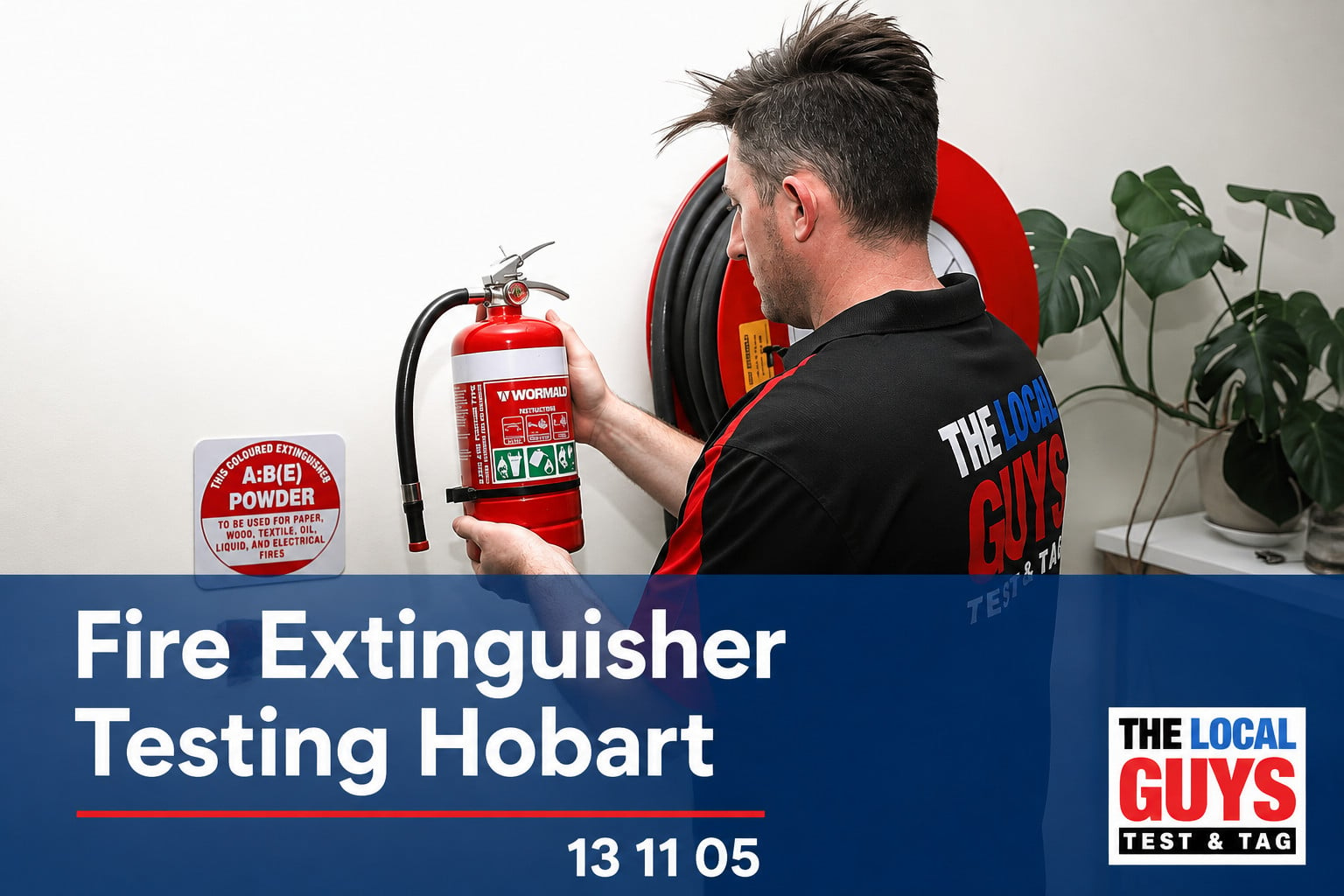
If you run a business in Brisbane, there's a good chance you have at least one fire extinguisher mounted somewhere on the premises. You might walk past it every day without giving it much thought, especially if nobody has ever needed to use it.
But fire extinguishers need regular maintenance, even when they haven't been used. Over time, components can deteriorate, pressure can change and equipment can become damaged or difficult to access. These problems aren't always obvious just by looking at the extinguisher.
For Queensland businesses, understanding how fire extinguisher testing works is part of maintaining workplace safety and meeting applicable building fire safety requirements. The process involves more than checking a pressure gauge or replacing a service tag.
This guide explains what happens during a fire extinguisher inspection, how AS 1851 servicing intervals work, when pressure testing may be required and what to check before hiring a qualified service provider.
What Is Fire Extinguisher Testing?
Fire extinguisher testing refers to the inspection and maintenance procedures used to assess whether portable fire extinguishers remain suitable for service.
The exact procedures depend on the type of extinguisher, its condition and the applicable maintenance requirements.
For example, a dry powder extinguisher may require different checks from a carbon dioxide extinguisher because the units have different components and operating characteristics.
Routine servicing helps identify problems that might affect an extinguisher's operation during an emergency.
What Happens During a Fire Extinguisher Inspection?
A technician generally checks the extinguisher's condition, identification and relevant operating components.
Depending on the extinguisher type and service schedule, the inspection may include:
- Checking for visible damage or corrosion.
- Examining the hose and nozzle.
- Inspecting the safety pin and tamper indicator.
- Checking the pressure indicator where fitted.
- Assessing the extinguisher's location and accessibility.
- Reviewing relevant identification labels.
- Checking whether additional maintenance is due.
Not every extinguisher uses the same pressure indicator or components, so the inspection must follow the requirements applicable to that particular unit.
A completed service should also be appropriately documented.
How Often Do Fire Extinguishers Need Testing in Brisbane?
Portable fire extinguishers are maintained according to applicable requirements, including servicing schedules under AS 1851.
These include routine six-monthly servicing and additional maintenance at specified intervals.
However, the exact requirements depend on the equipment and relevant building fire safety framework.
Fire Extinguisher Servicing Intervals
| Interval | General Requirement |
|---|---|
| Every 6 months | Routine inspection and servicing |
| Every 12 months | Additional checks specified by the applicable service schedule |
| Every 5 years | More extensive maintenance, including applicable pressure testing |
| After discharge | Assessment and appropriate servicing before reuse |
These intervals provide a general guide to the relevant AS 1851 schedules.
For Brisbane businesses, the broader maintenance obligations also need to be considered under Queensland's fire safety framework.
Our separate guide to QDC MP 6.1 fire safety requirements in Brisbane explains those broader obligations.
What Happens During Six-Monthly Fire Extinguisher Servicing?
Six-monthly servicing is an important part of maintaining portable fire extinguishers.
A technician examines the equipment according to the applicable maintenance schedule and looks for conditions that may affect its suitability for use.
For example, an extinguisher might have a damaged hose, missing safety pin or signs of corrosion around the cylinder.
Even if the extinguisher hasn't been used, these problems may develop over time.
Why Is Six-Monthly Servicing Important?
Routine servicing helps identify defects before equipment is needed during an emergency.
An extinguisher may appear normal from a distance but have a problem that requires closer inspection.
Regular servicing also provides an opportunity to identify equipment that has been moved, damaged or made difficult to access.
For businesses managing several extinguishers, scheduled maintenance makes it easier to keep track of service dates and identify units requiring additional attention.
What Happens During Annual Fire Extinguisher Maintenance?
Annual servicing includes additional requirements specified by the relevant AS 1851 maintenance schedule.
The exact activities depend on the extinguisher type.
Some units require particular checks or procedures that aren't part of every routine six-monthly inspection.
This is why annual servicing shouldn't simply be treated as another quick visual check.
Do All Fire Extinguishers Have the Same Annual Requirements?
No. Different extinguisher types have different servicing requirements.
A carbon dioxide extinguisher, for example, has different characteristics from a stored-pressure dry powder extinguisher.
Technicians need to follow the maintenance schedule applicable to the equipment rather than applying one generic checklist to every unit.
Businesses should ask their service provider whether any extinguishers require additional maintenance during the upcoming visit.
When Do Fire Extinguishers Need Pressure Testing?
Fire extinguisher cylinders are designed to contain pressurised contents, so maintaining their structural integrity is important.
AS 1851 includes more extensive periodic servicing requirements, with pressure testing applying according to the relevant extinguisher type and schedule.
Five-yearly servicing is an important maintenance milestone for many portable extinguishers.
However, the exact work depends on the equipment.
What Is Hydrostatic Pressure Testing?
Hydrostatic pressure testing is a controlled procedure used to assess whether a pressure-containing component can withstand the required test pressure.
For fire extinguishers, applicable testing may form part of a more extensive servicing process.
This work requires suitable equipment and competent personnel.
It shouldn't be attempted as a DIY maintenance activity.
Does Every Extinguisher Need Recharging After Testing?
Not necessarily. Recharging requirements depend on the extinguisher type and the servicing performed.
An extinguisher that has been discharged, failed inspection or undergone certain maintenance procedures may require refilling or replacement before it can return to service.
Your service provider should explain which units require additional work and whether those activities are included in the maintenance quote.
Is Checking the Fire Extinguisher Pressure Gauge Enough?
No. A pressure gauge provides information about the pressure condition of certain extinguisher types, but it doesn't establish that the entire unit is suitable for service.
For example, an extinguisher may have a normal pressure reading while still having a damaged hose, missing safety pin or corrosion.
Some extinguisher types don't use the same kind of pressure gauge.
What About Carbon Dioxide Fire Extinguishers?
Carbon dioxide extinguishers are different from many stored-pressure units.
They generally don't have the same pressure gauge arrangement, and checking their contents involves different procedures.
For example, weighing may be used as part of assessing the extinguisher's charge.
For more information about this extinguisher type, read our guide to carbon dioxide fire extinguishers.
What Is a Fire Extinguisher Service Tag?
A service tag provides a visible record of maintenance activities performed on a fire extinguisher.
The information recorded depends on the tag format and applicable requirements.
A technician may mark the relevant servicing date and level of maintenance completed.
However, the tag itself isn't a substitute for the actual servicing procedure.
Does a Service Tag Prove Compliance?
A current service tag can help demonstrate that maintenance has been performed, but it doesn't automatically establish that every aspect of a workplace's fire safety obligations has been satisfied.
For example, the extinguisher might be correctly serviced but installed in an unsuitable location or obstructed by stored materials.
Businesses should also retain appropriate maintenance documentation.
What Records Should Be Kept?
Depending on the installation and applicable requirements, maintenance documentation may include:
- Equipment identification.
- Extinguisher type.
- Equipment location.
- Service date.
- Maintenance level completed.
- Inspection findings.
- Defects identified.
- Corrective actions.
- Next scheduled service.
Keeping these records organised can help businesses manage maintenance and respond to compliance enquiries.
Who Can Legally Test Fire Extinguishers in Queensland?
Fire protection work in Queensland is subject to licensing requirements administered through the Queensland Building and Construction Commission.
The specific licence required depends on the fire protection activity being undertaken.
Portable fire extinguisher inspection and maintenance fall within the relevant fire protection licensing framework.
Businesses should verify that a provider is appropriately licensed for the work rather than assuming that a general electrical qualification is sufficient.
How to Check a Fire Extinguisher Testing Provider
Before booking, ask for the provider's relevant QBCC licence details.
Check whether the licence is current and covers the type of work being performed.
It's also worth asking whether the technician is competent to perform the relevant AS 1851 procedures and what documentation will be provided after servicing.
You can find information about licensing through the QBCC fire protection licence requirements.
What Happens if a Fire Extinguisher Fails Inspection?
Sometimes an extinguisher needs additional maintenance or replacement.
This might happen because of corrosion, damaged components, a missing safety device or another defect identified during servicing.
The appropriate response depends on the nature and severity of the problem.
Can a Faulty Extinguisher Remain in Service?
An extinguisher that is unsuitable for service shouldn't simply remain available for emergency use.
The technician should identify the problem and explain whether the unit requires repair, further servicing or replacement.
Businesses should also consider whether temporary fire safety arrangements are needed while equipment is unavailable.
Any corrective action should be documented.
How Much Does Fire Extinguisher Testing Cost in Brisbane?
The cost of fire extinguisher servicing varies depending on the number of units, equipment types, site location and maintenance required.
A business with several extinguishers may have different servicing costs from a small office with only one or two units.
Additional work, such as recharging or pressure testing, may also affect the total price.
What Should a Fire Extinguisher Testing Quote Include?
| Quote Detail | What to Check |
|---|---|
| Number of extinguishers | How many units will be serviced? |
| Extinguisher types | Are different types included? |
| Routine servicing | Is the required maintenance included? |
| Additional maintenance | Are recharge or pressure-testing costs separate? |
| Documentation | Will a service report be provided? |
| Site attendance | Are travel or call-out charges included? |
| Corrective work | How will defective equipment be handled? |
A written quote should explain the proposed work and identify any additional charges that may apply.
For Brisbane businesses, the most important thing is choosing an appropriately licensed provider who can perform the required maintenance.
Fire Extinguisher Testing vs Electrical Test and Tag
Fire extinguisher testing and electrical test and tag are different services.
Fire extinguisher servicing follows applicable fire protection maintenance requirements, including relevant AS 1851 procedures.
Electrical test and tag deals with in-service safety inspection and testing of applicable electrical equipment under standards such as AS/NZS 3760.
Completing one service doesn't automatically satisfy the requirements of the other.
Why the Difference Matters
A business may have all its portable appliances tested but still have overdue fire extinguisher maintenance.
Similarly, a workplace's fire protection equipment may be maintained correctly while electrical appliances remain overdue for inspection.
Both activities can contribute to workplace safety, but they address different risks and involve different competencies.
The Local Guys provides electrical test and tag services in Brisbane, including portable appliance testing and relevant electrical safety services.
For fire extinguisher inspection and maintenance, Brisbane businesses should engage an appropriately licensed Queensland fire protection provider.
Frequently Asked Questions About Fire Extinguisher Testing in Brisbane
How Often Should Fire Extinguishers Be Tested in Brisbane?
Portable fire extinguishers are subject to applicable maintenance requirements, including routine six-monthly servicing under relevant AS 1851 schedules. Additional annual and periodic servicing may also be required depending on the extinguisher type.
Who Can Test Fire Extinguishers in Queensland?
Fire extinguisher servicing must be performed by appropriately licensed and competent personnel under the relevant Queensland fire protection requirements. Businesses should check the provider's QBCC licence before arranging regulated maintenance work.
Does Fire Extinguisher Testing Include Recharging?
Not always. Routine servicing and recharging are different activities. Recharging may be required after an extinguisher has been discharged or when particular maintenance procedures call for it. Confirm what's included in the quote.
What Is the Difference Between a Fire Extinguisher Check and a Service?
A basic visual check may identify obvious damage or access problems. A scheduled service follows the relevant maintenance procedures and may involve additional inspections or tests. Routine visual checks don't replace required professional servicing.
How Often Do Fire Extinguishers Need Pressure Testing?
Many portable extinguishers have more extensive servicing requirements at five-yearly intervals, including applicable pressure-testing procedures. The exact requirements depend on the extinguisher type and relevant maintenance schedule.
Can a Fire Extinguisher Be Used After Its Service Date Has Passed?
An overdue service date means required maintenance may not have been completed. The equipment should be assessed by an appropriately qualified provider rather than assuming it remains suitable for use. Businesses should arrange overdue servicing promptly.
Does a Service Tag Prove Fire Extinguisher Compliance?
A service tag provides evidence of recorded servicing activity, but it doesn't confirm that every fire safety requirement has been met. Appropriate maintenance records and compliance with applicable building requirements are also important.
Does Electrical Test and Tag Cover Fire Extinguisher Testing?
No. Electrical test and tag and fire extinguisher maintenance involve different equipment, standards and competencies. Businesses should arrange each service separately with appropriately qualified providers.
Keeping Fire Extinguishers Ready in Brisbane Workplaces
Fire extinguishers are easy to overlook when everything appears to be working normally. However, routine servicing helps identify problems that may not be obvious during everyday use.
Understanding AS 1851 maintenance intervals, checking service tags and keeping appropriate records can help Brisbane businesses manage their fire safety responsibilities.
It's also important to use appropriately licensed fire protection professionals for the relevant maintenance work.
If you're unsure when your fire extinguishers were last serviced, check the available records and arrange an assessment with a suitable provider.
For electrical equipment safety, The Local Guys Test & Tag provides professional test and tag services across Brisbane.
Request a Free Electrical Test and Tag Quote
Call 13 11 05

